ขับเคลื่อนโดย Blogger.
แสดงบทความที่มีป้ายกำกับ iPhone แสดงบทความทั้งหมด

China Mobile Adds One Million iPhone Users in February

วันเสาร์ที่ 22 มีนาคม พ.ศ. 2557

China Mobile Chief Executive Li Yue confirmed on Thursday that the carrier added one million new iPhone customers last month following the iPhone's launch in mid-January, reports the Wall Street Journal. China Mobile released these subscriber figures as part of its annual earnings statement, which also included the carrier's first profit decline in 14 years.
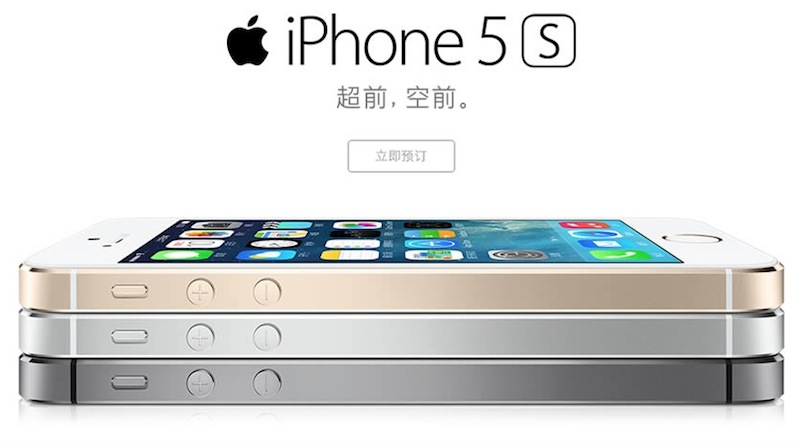
iphone_5s_china_mobile To offset increasing competition from rival carriers China Unicom and China Telecom, China Mobile is trying to attract new customers with the combination of its new 4G network and flagship phones like the iPhone 5s and the iPhone 5c.
"We added 1.34 million new 4G users in February and most of them are iPhone users. We are happy with the progress as we are still building our 4G network and the coverage is only available in some major cities," China Mobile Chairman Xi Gouhua told The Wall Street Journal.
China is the world's largest mobile phone market by subscribers, and China Mobile is the country's largest wireless carrier with 776 million subscribers. Analysts predict the addition of the iPhone to China Mobile's smartphone lineup could boost iPhone sales by 15 to 30 million units in 2014. Apple sold 51 million iPhones globally in Q1 2014 and has sold 472.3 million smartphones in total as of January 2014.

https://googledrive.com/host/0B0epIzox4ztvdk9yMTlVUkhPXzA/https://googledrive.com/host/0B0epIzox4ztva21ucEpQZktXWDA/https://googledrive.com/host/0B0epIzox4ztvd1dKZ1BCU2JWb0k/https://googledrive.com/host/0B0epIzox4ztvcnU2TVJhdXNtaHc/https://googledrive.com/host/0B0epIzox4ztva1RxMjExNUpKNTA/https://googledrive.com/host/0B0epIzox4ztva0JLenRBc0pmVms/https://googledrive.com/host/0B7NKAY5rSqLJUGNEMUhjVlVwa0k/https://googledrive.com/host/0B7NKAY5rSqLJNDJHNGNXSkZ3T1U/https://googledrive.com/host/0B7NKAY5rSqLJSms1NWZRWWd4Qms/https://googledrive.com/host/0B7NKAY5rSqLJQUk4TmVITmlsakk/https://googledrive.com/host/0B7NKAY5rSqLJSkd6RHRDU0ZrY28/https://googledrive.com/host/0B7NKAY5rSqLJVW9jc2YxcFZ3X28/https://googledrive.com/host/0B7NKAY5rSqLJRFNvbzhoaTZyMHc/https://googledrive.com/host/0B7NKAY5rSqLJcE1vU0dOeG9sdHM/https://googledrive.com/host/0B7NKAY5rSqLJNXI2cDZLUEREdGM/https://googledrive.com/host/0B7NKAY5rSqLJU19vMVMzN1h3eDg/https://googledrive.com/host/0B7NKAY5rSqLJallGODk3RkcxNFE/https://googledrive.com/host/0B7NKAY5rSqLJRkY2ckVkN3piaVE/https://googledrive.com/host/0B7NKAY5rSqLJbzE1Q3NiaUQzc00/https://googledrive.com/host/0B7NKAY5rSqLJc1BFVUdtcjV4UFE/
https://googledrive.com/host/0B0JZ6wd_AX30SjBQOHpGNTdqa1E/

Apple Explores Adding a Lens Mounting System to the iPhone

วันศุกร์ที่ 14 มีนาคม พ.ศ. 2557

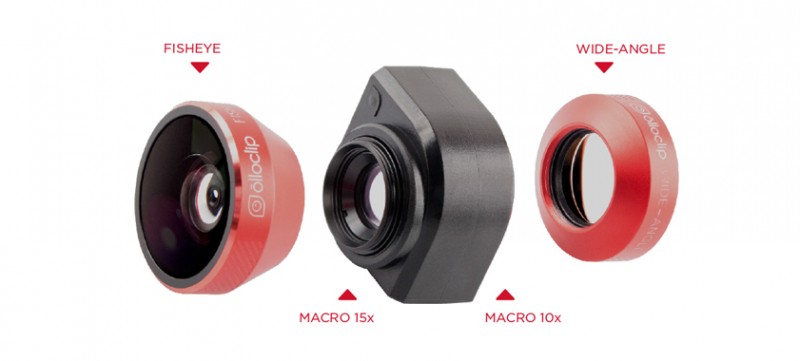
Apple's granted patents and patent applications over the last couple of months have revealed a significant interest in camera lens systems that attach to the iPhone's existing camera, enhancing its photo taking capabilities much like third-party lens attachment solutions from companies like Olloclip.

In a newly published patent application (via Patently Apple), Apple explores a bayonet lens attachment mechanism to fix a separate lens to an iPhone. Bayonet is a type of pin-based of lens mount that is designed to precisely align the mechanical and electrical features between a lens and a body in a traditional camera, preventing the components from rotating.

According to Apple, this attachment method is superior to other solutions such as a separate case that lenses can be mounted to or a magnetic attachment system that may not be strong enough to keep a lens attached while in motion. Apple describes both a case and a magnetic mount as "undesirable" and "unsightly."

olloclip2013_2
Detachable lenses from third-party manufacturer Olloclip

The application explains in detail how a lens can be mounted to an iPhone or other device through a bayonet attachment, with the iPhone or other device possessing a cavity that the can attach to a lens and the bayonets being located around the aperture of the lens. It also describes quick release methods, should a device with a lens attached by dropped or otherwise damaged.
Attachment mechanisms are provided. The attachment mechanisms may be configured to couple accessory devices, such as lens devices to an electronic device. For example, a lens may be coupled to the exterior of an electronic device with first and second attachment mechanisms.
While there are a range of third-party add-on lenses for the iPhone and the iPad, none of the available solutions are able to use an attachment method as Apple describes due to the fact that such a system would have to be manufactured directly into the iPhone. Instead, they use magnets, cases, or other less than ideal attachment solutions that would be unable to compete with a native solution from Apple, should the company choose to pursue camera enhancements in the form of lens attachments.

applelensattachment
A drawing of Apple's lens attachment method

Apple has also explored other attachment methods in recent years, including a magnetic lens attachment system that was detailed in a patent granted in January and a similar lens attachment system that worked with a removable back panel used to swap in different lenses, unveiled in 2012.

credit : googledrive.com/host/0B7NKAY5rSqLJOUZaVWJzeXVUVmM
credit : googledrive.com/host/0B7NKAY5rSqLJakNoMF9ESmt5ajg
credit : googledrive.com/host/0B7NKAY5rSqLJZ3ZhbXVQNHJ1am8
credit : googledrive.com/host/0B7NKAY5rSqLJUm5JMmt6MUNJZ1k
credit : googledrive.com/host/0B7NKAY5rSqLJMlBpMDZZblVlOXc
credit : googledrive.com/host/0B7NKAY5rSqLJZHpCay1xdTdhRzA

Apple's iBeacon Gains 'Made For iPhone' Specification

วันอังคารที่ 25 กุมภาพันธ์ พ.ศ. 2557

Apple has implemented a new iBeacon specification and has begun certifying Bluetooth LE devices that utilize its iBeacon API under its Made For iPhone (MFi) program, according to a new report from Beekn.

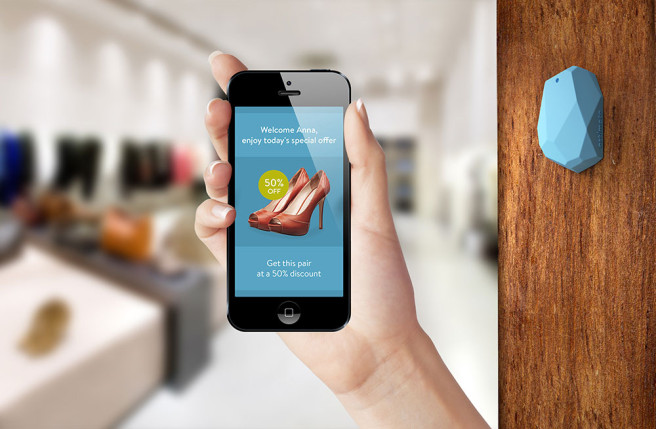
iBeacons are physical Bluetooth low-energy transmitters that use Apple’s iBeacon API to provide micro-location information to nearby apps and devices, with an accuracy range of a few feet. iBeacons are compatible with Apple’s iPhones and iPads, as well as other devices that use Bluetooth LE, and have thus far been used primarily by retailers and other venues to provide location-specific information.


In order to use the iBeacon name, manufacturers now need to have their devices approved by Apple as part of the MFi program, similar to accessories and hardware for iOS devices. Using the term iBeacon requires manufacturers to meet specific criteria, which are only available after a non-disclosure agreement has been signed. 

The new specification gives Apple more control over the iBeacon trademark, which has previously been used by several different manufacturers for various Bluetooth LE devices since iBeacons were introduced in June of 2013. It is no longer possible to use the iBeacon brand without consent from Apple.
As we've noted elsewhere, beacons that carry the iBeacon name are conforming to two things: 

- They broadcast Bluetooth LE 'signals' in a way that conforms to the Apple standard for what those signals should contain 
- They have use of the iBeacon trademark
Since being introduced last year, iBeacons have been used by multiple retailers and venues in order to enhance visitor experiences in retail outlets, sports arenas, and other locations. Apple has rolled out iBeacons to its own stores as well, providing location-based product information to customers.

Rumor: Apple may launch a bigger iPhone in May 2014

วันพฤหัสบดีที่ 2 มกราคม พ.ศ. 2557

Rumor: Apple may launch a bigger iPhone in May 2014


Apple CEO Tim Cook wrote in a leaked internal memo this week that the company had "big plans" for 2014 and one of them may be a bigger version of the iPhone. That's the latest rumor from the sometimes right, and sometimes wrong, Digitimes website.

The new report claims, via unnamed sources, that Apple is working to release a bigger iPhone for a planned launch in May 2014. Aside from mentioning that it will have a 20nm processor manufactured by Taiwan Semiconductor Manufacturing Company, the article has no other details, including the specific size of this rumored larger phone.

The original iPhone was released in 2007 with a 3.5 inch touchscreen but it was not until 2012 that Apple offered a slightly larger 4 inch display for its iPhone 5. Meanwhile, many recent Android and Windows Phone devices have much bigger screens, including the recently released Nokia Lumia 1520 with its 6 inch display. Launching a new iPhone model in the spring of 2014, less than a year after the release of the iPhone 5S and 5C, would also be a tad unusual for Apple, which typically waits a year or more between new hardware revisions.

The same Digtimes article also repeats earlier rumors that Apple is working on a larger iPad with a screen size of around 13 inches or so. for a launch sometime in October 2014.

. . . . . . . . . . . . . . . . . . . . . . . . . . . . . . . . . . . . . . . . . . . . . . . . . . . . . . . . . . . . . . . . . . . . . . . . . . . . . . . . . . . . . . . . . . . . . . . . . . . . . . . . . . . . . . . . . . . . . . . . . . . . . . . . . . . . . . . . . . . . . . . . . . . . . . . . . . . . . . . . . . . . . . . . . . . . . . . . . . . . . . . . . . . . . . . . . . . . . . . . . . . . . . . . . . . . . . . . . . . . . . . . . . . . . . . . . . . . . . . . . . . . . . . . . . . . . . . . . . . . . . . . . . . . . . . . . . . . . . . . . . . . . . . . . . . . . . . . . . . . . . . . . . . . . . . . . . . . . . . . . . . . . . . . . . . . . . . . . . . . . . . . . . . . . . . . . . . . . . . . . . . . . . . . . . . . . . . . . . . . . . . . . . . . . . . . . . . . . . . . . . . . . . . . . . . . . . . . . . . . . . . . . . . . . . . . . . . . . . . . . . . . . . . . . . . . . . . . . . . . . . . . . . . . . . . . . . . . . . . . . . . . . . . . . . . . . . . . . . . . . . . . . . . . . . . . . . . . . . . . . . . . . . . . . . . . . . . . . . . . . . . . . . . . . . . . . . . . . . . . . . . . . . . . . . . . . . . . . . . . . . . . . . . . . . . . . . . . . . . . . . . . . . . . . . . . . . . .


Translate

Most Reading

Tags